Leo Mittler
Leo Mittler (18 December 1893 – 16 May 1958) was an Austrian playwright, screenwriter and film director. Mittler was born in Vienna to a Jewish family. Following the Nazi rise to power in 1933, Mittler spent many years in exile in several countries, including Britain and France, before settling in the United States during the Second World War. Mittler's career as a director had all but ended in the mid-1930s, after making the Stanley Lupino musical comedy Cheer Up (1936), but he worked occasionally as a screenwriter.
Mittler wrote the original story of the MGM pro-Soviet film Song of Russia (1944) which was later investigated by the House Un-American Activities Committee for its alleged communist sympathies. Mittler returned to Germany post-war, dying there in 1958. Before his death, he worked in German theatre and television.
Известность


Фильмография — команда (22)
| Год | Название | Работа | Тип |
|---|---|---|---|
| 1955 | Heimkehr des Helden | Режиссёр | Фильм |
| 1954 | Defraudanten | Режиссёр | Фильм |
| 1944 | Песнь о России | Автор истории | Фильм |
| 1943 | Корабль-призрак | Автор истории | Фильм |
| 1939 | Les Otages | Scenario Writer | Фильм |
| 1936 | The Last Waltz | Режиссёр | Фильм |
| 1936 | Cheer Up | Режиссёр | Фильм |
| 1936 | La Dernière Valse | Режиссёр | Фильм |
| 1935 | Honeymoon for Three | Режиссёр | Фильм |
| 1933 | La Voix sans visage | Режиссёр | Фильм |
| 1933 | Amour et publicité | Режиссёр | Фильм |
| 1932 | Une nuit à l'hôtel | Режиссёр | Фильм |
| 1932 | Les Nuits de Port Said | Режиссёр | Фильм |
| 1931 | Das Konzert | Режиссёр | Фильм |
| 1931 | Leichtsinnige Jugend | Режиссёр | Фильм |
| 1931 | Tropennächte | Режиссёр | Фильм |
| 1931 | Jede Frau hat etwas | Режиссёр | Фильм |
| 1931 | Sonntag des Lebens | Режиссёр | Фильм |
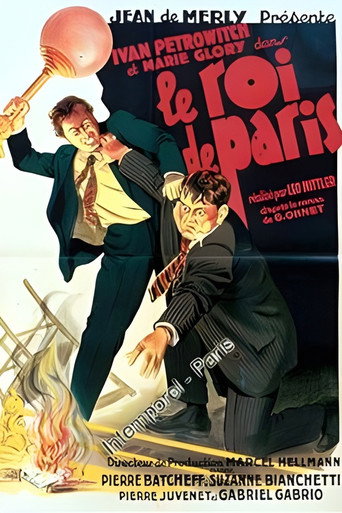
| 1930 | Le roi de Paris | Режиссёр | Фильм |
| 1930 | Es gibt eine Frau, die dich niemals vergißt | Режиссёр | Фильм |
| 1929 | По ту сторону улицы | Режиссёр | Фильм |
| 1928 | Serenissimus und die letzte Jungfrau | Режиссёр | Фильм |